How an Elevator Works

You’ve probably stepped onto an elevator hundreds of times, but have you ever questioned how it works?

You’ve probably stepped onto an elevator hundreds of times, but have you ever questioned how it works? How it balances your weight to keep you from falling? After taking a look behind the scenes, you may never look at an elevator ride the same way again.

In 1861, Elisha Graves Otis created what would be the first iteration of the elevator that we use today. It was the first time anyone had created an elevator equipped with a safety feature, a device to keep it from falling if the lifting rope broke. Today, there are two types of elevators that are typically used – and lucky for us, both come equipped with safety features standard.

The Hydraulic Elevator

Hydraulic elevators are comprised of a cylinder, hydraulic fluid, a piston, a fluid reservoir, a rotary pump, and a valve. When the elevator needs to go up, the pump sends fluid into the cylinder which closes the valve. This pressurizes the fluid and moves the piston up. To go down, the valve opens and fluid is released back into the reservoir. The machine room to house the mechanism for a hydraulic elevator is typically located on the lowest floor. 

Safety Because of the hydraulic arm, the elevator car is never suspended in the air. It is always being held up, no matter where the elevator is. There are fewer moving parts than a roped elevator, so as long as you get your elevator maintained regularly, it’s completely safe. 

The Roped Elevator 

Roped elevators can travel much quicker than hydraulic elevators. These elevators include a counterweight to balance the car, the electric motor, breaks, metal chains and pulleys, and a safety system. It’s basically an elaborate rope and pulley system. The ropes are wrapped around a sheave that is connected to the electric motor. When the motor turns one way, the car goes up, and when it turns the other way, the car goes down. The ropes are connected on the other side to a counterweight that weighs as much as 40% of the elevator’s capacity. Typically all of this equipment is housed in a machine room above the elevator shaft. 

Safety Although one rope can easily carry the weight of the car and the counterweight Every roped elevator is built with multiple ropes. This is the first line of safety. Elevators are built with between four and eight ropes, typically, so if one breaks, there are plenty more to ensure the car doesn’t fall. Other than the ropes, the cars also have built-in braking systems just in case.

If this isn’t already more than you want to know about how an elevator works, feel free to contact us with any questions you may have! 
Cleaning & Disinfecting Commercial Elevators

It is more important now than ever to keep your elevators clean and disinfected. There are several solutions and cleaning methods that you can use to keep here are a few of our best suggestions. 

If you own or operate a commercial elevator, you probably already know you need to keep it clean. Elevators can collect the germs of dozens or even hundreds of people within a single day. Especially with the continuous spread of COVID-19, it is more important now than ever to keep your elevators clean and disinfected. There are several solutions and cleaning methods that you can use to keep here are a few of our best suggestions. 

Keeping It Clean

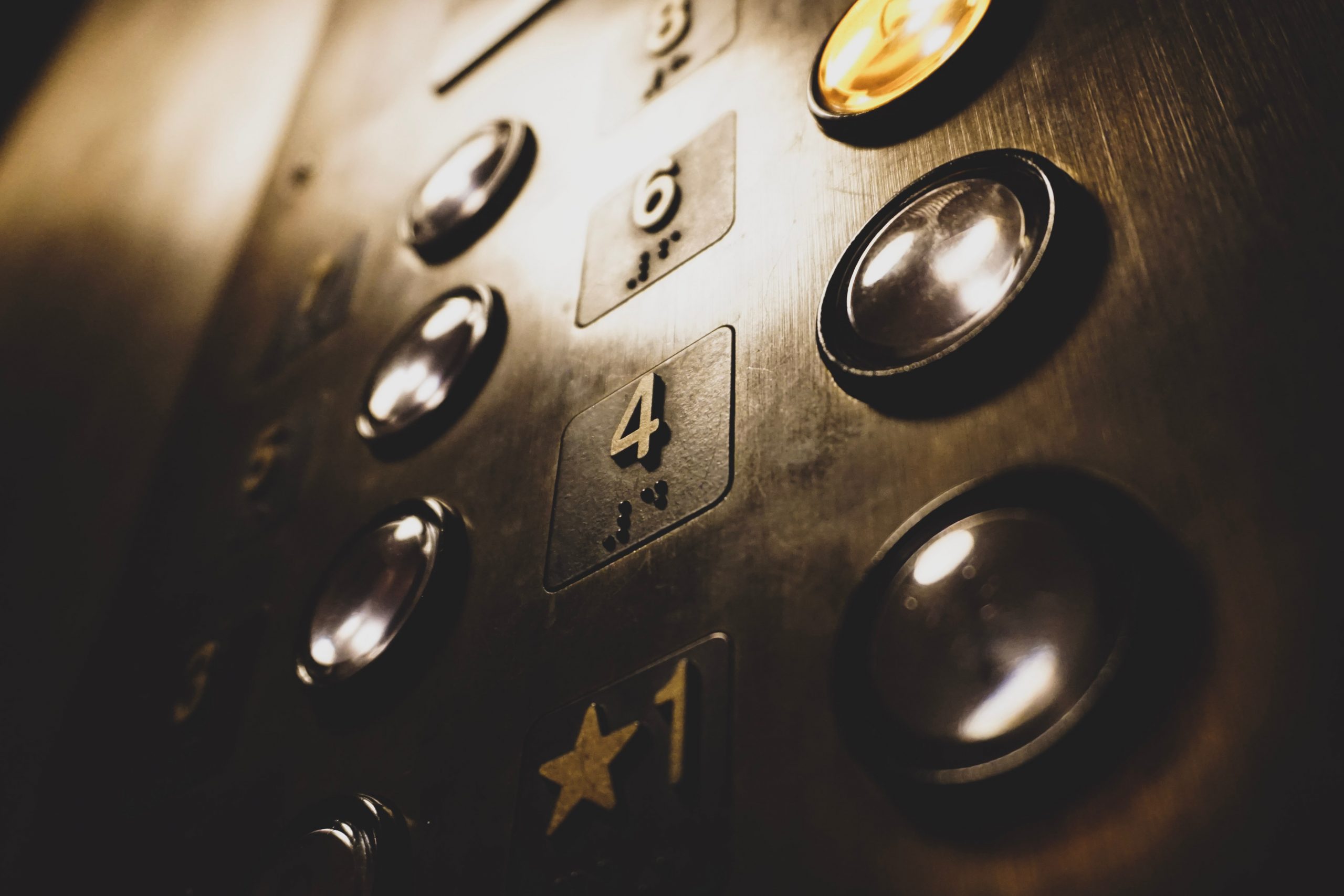
elevator buttons
Photo by Jason Dent on Unsplash

One of the most accessible and easy ways to keep your commercial elevator clean and safe is routine sanitation. Now that we know that COVID-19 can be transmitted by touching surfaces, it is more important than ever to disinfect at least once daily. Clean the high-touch surfaces in the elevator like rails, buttons, and doors. Keep in mind that using an alcohol-based cleaner could damage your buttons. As for the floors of the elevator, use a disinfecting solution that is safe for your floors and mop as normal. 

Surprisingly, the part of an elevator that collects the most dirt and debris is not one that people regularly come in contact with. The tracks – the grooved sets of lift entryways – are known for collecting tiny specks of dirt, grass, dust, and other nasty germs. The best way to clean your tracks is by using a high powered vacuum, along with a non-corrosive cleaner. 

Cleaning Tech

Along with a strict cleaning schedule, there are other measures you can take to eliminate the spread of germs in your elevator(s). Vantage Fixtures has created a foot pedal that is used to call the elevator to your floor. Instead of using traditional buttons and risking the spread of germs, the Toe-to-Go foot-activated elevator call button allows for hands-free use of the elevator. These are a great idea for elevators in high-traffic buildings and are something you should highly consider. 

Another cool piece of technology that we recommend is the natural purifier made by The Caspr Group. It eliminates air pollution and illness-causing pathogens on surfaces. This can be beneficial for disinfecting elevator buttons, railings, and the walls inside. This purifier converts water into hydrogen peroxide and uses special UV lighting to disinfect. And, you’ll only need to replace it once a year! 

Quick Tips

Here are our best quick tips for cleaning your elevator(s). 

  • Use a non-abrasive spray. An abrasive spray could damage your elevator buttons and fixtures and cost you down the line. Stay away from bleach as well. 
  • Use a disposable paper towel or microfiber cloth – never sponges – to clean the inside of your elevator(s).
  • Don’t spray directly on the surface. Instead, spray your towel first then wipe. 

If the COVID-19 pandemic has taught us anything, it’s that we can’t be too careful when it comes to cleanliness. Sticking to a routine cleaning schedule for your commercial elevator(s) is the best way to keep all who use them safe. Contact the Godwin team for any questions about cleaning and disinfecting your commercial elevators.